

To provide a direct, unequivocal answer to the question posed in the title: No, you cannot use just any red light for red light therapy. While a standard red incandescent party bulb, a red neon sign, or a smartphone screen displaying a red image may look identical to a clinical device to the naked human eye, they entirely lack the scientific specifications required to trigger a biological response. Authentic red light therapy—scientifically known as photobiomodulation (PBM)—requires highly specific wavelengths of light measured in nanometers (nm), delivered at a precise optical intensity (irradiance), using advanced Light Emitting Diode (LED) technology to penetrate the skin and interact with cellular mitochondria. Using a basic red-tinted light bulb will provide ambient lighting, but it will absolutely not provide the therapeutic health benefits associated with genuine red light therapy.
Introduction: The Rise of Light-Based Wellness
In the rapidly expanding world of modern biohacking, holistic health, and advanced cellular recovery, red light therapy has ascended from a highly specialized clinical treatment to a fundamental cornerstone of daily wellness. Millions of individuals across the globe are turning to this non-invasive modality to improve multiple aspects of their health. The applications are vast and scientifically supported, ranging from managing chronic joint pain and reducing systemic inflammation to improving dermatological health, minimizing wrinkles, optimizing athletic performance, and drastically accelerating post-workout muscle recovery.
As the popularity of red light therapy continues to surge at an unprecedented rate, a significant paradigm of confusion has simultaneously emerged among consumers. With the market flooded with an endless array of light-emitting products, many individuals who are entirely new to the concept of photobiomodulation find themselves asking a very logical question: Why do I need to invest in a specialized, professional-grade red light therapy panel? Can’t I just buy a cheap red light bulb from the local hardware store, or put a red plastic filter over a lamp I already own?
While it might intuitively seem like your own makeshift source of red light would be just as effective as a scientifically engineered, professional-grade red light therapy panel, the reality is governed by the strict laws of quantum physics and optical biology. There are multiple, highly complex technical considerations—ranging from wavelength specificity and optical power density to electrical flicker and thermal heat management—that dictate whether a light source is biologically active or completely therapeutically inert. In this exhaustive guide, we will deconstruct the science of photobiomodulation, explore the precise biological mechanisms at play, and explain exactly why the source of your red light matters more than anything else.
What is Red Light Therapy? The Origins and Evolution
Before anyone can truly understand what constitutes the best and most effective sources for red light therapy, they must first build a foundational knowledge of what red light therapy actually is, where it came from, and how it fundamentally interacts with the human body.
While the use of sunlight for healing (heliotherapy) dates back to ancient civilizations, the modern, targeted application of specific red wavelengths first gained serious, well-funded scientific attention during research conducted by the National Aeronautics and Space Administration (NASA) in the late 1980s and early 1990s. NASA was initially exploring the use of high-intensity Light Emitting Diodes (LEDs) for a completely different purpose: promoting plant growth in the zero-gravity environment of outer space. Growing food on long-term space missions was a logistical hurdle, and specific wavelengths of red and blue light were found to stimulate photosynthesis in plants effectively.
However, during these extensive botanical experiments, NASA researchers and the scientists handling the plants noticed a profound and accidental secondary effect. The scientists, who frequently suffered from minor cuts, scrapes, and abrasions on their hands while working in the laboratory, noticed that their wounds were healing at an unusually rapid pace when exposed to the prolonged red LED light intended for the plants. In the environment of space, or even in high-stress laboratory environments, human wound healing is typically suppressed and delayed. The fact that these minor injuries were closing and healing faster than normal was a groundbreaking anomaly.
This accidental discovery prompted NASA to pivot and fund specific medical research into the effects of LED light on human cellular metabolism. They developed the HEALS (High Emissivity Aluminiferous Luminescent Substrate) technology to explore how these specific wavelengths could prevent muscle atrophy and bone density loss in astronauts during extended space flights. Since NASA’s initial, groundbreaking medical trials, the field of photobiomodulation research has grown exponentially. Today, thousands of peer-reviewed clinical studies have been published, exploring red light therapy’s efficacy for improving sleep quality and circadian rhythm regulation, enhancing cognitive function and neuroprotection, boosting localized blood circulation, and achieving a myriad of other profound health benefits. You can review a wealth of this clinical literature through authoritative databases like the National Institutes of Health (NIH) PubMed repository.
How Does Red Light Therapy Work? The Cellular Engine
While research into red light therapy and its systemic effects is still a highly active and ongoing area of scientific study, the existing, well-established research demonstrates that the vast majority of the positive effects of red light therapy are due to how specific light photons interact directly with the mitochondria.
Mitochondria are tiny, ubiquitous organelles found in almost every single cell of the human body, from your skin fibroblasts to your muscle tissues and brain neurons. They are universally referred to as the “powerhouses” of the cell. The mitochondria are responsible for a multitude of complex biochemical functions, but their most critical role is orchestrating cellular respiration—the process by which the food we eat and the oxygen we breathe are converted into Adenosine Triphosphate (ATP). ATP is the fundamental energy currency of all biological life. Without sufficient ATP, your cells cannot repair damage, produce collagen, fight off oxidative stress, or perform their designated biological duties.
Light Affects Biological Functions
To understand how red light boosts ATP, we must look at how light interacts with human biology in general. The human body is not a closed system; it is highly responsive to its external environment, particularly to specific bands of electromagnetic radiation (light). Many specialized molecules or cellular structures in the body are deeply sensitive to particular, distinct wavelengths of light. These light-absorbing molecules are known as “chromophores.”
The most universally understood example of this biological phenomenon occurs within the human eye. The retina contains specialized photoreceptor cells known as cone cells. There are three different primary types of cone cells in the human eye, and each one is activated exclusively by specific, varying wavelengths of visible light (corresponding to red, green, and blue). This highly specific photon absorption is what creates the brain’s ability to perceive the full spectrum of color in our environment.
Furthermore, light can do much more than just trigger a visual signal; it can actually alter the physical structure of a molecule. A prime medical example of this is how a molecule called bilirubin is affected by specific wavelengths of ultraviolet (UV) and blue visible light. Bilirubin is a yellowish pigment that is made during the normal breakdown of red blood cells. In some newborns, the liver is not fully developed enough to process and excrete bilirubin, leading to a dangerous buildup known as neonatal jaundice. If left untreated, severe jaundice can lead to permanent brain damage.
When neonates with this condition are exposed to specific wavelengths of blue light, the light photons physically interact with the bilirubin molecules in the skin. The light alters the shape and structure of the bilirubin molecule, converting it into a water-soluble form that the infant’s body can easily excrete through urine and stool without needing the liver to process it. This life-saving medical intervention perfectly illustrates how highly specific wavelengths of light can trigger dramatic, systemic chemical changes within the human body.
The Specific Target: Cytochrome C Oxidase
In the specific context of red light therapy, the biological target—the chromophore—is not a cone cell in the eye or bilirubin in the skin. The target is a crucial, light-sensitive enzyme located on the inner membrane of the mitochondria called cytochrome c oxydase (often abbreviated as CCO or Complex IV).
Cytochrome c oxidase is the terminal enzyme in the electron transport chain, which is the final stage of cellular respiration where the bulk of the cell’s ATP is synthesized. Under normal conditions, this enzyme binds with oxygen to create energy. However, when the body experiences physiological stress, illness, physical injury, or the natural consequences of aging, the cells produce an excess of a molecule called nitric oxide. This nitric oxide competitively binds to the cytochrome c oxidase enzyme, essentially blocking oxygen from entering the system. This halts ATP production, leading to cellular fatigue, heightened inflammation, and delayed tissue healing.
This enzyme is highly sensitive to very specific wavelengths of visible red and invisible near-infrared light. When the correct wavelengths of light penetrate the tissue and strike the cytochrome c oxidase enzyme, the light photons excite the electrons within the enzyme. This photochemical excitation forcibly breaks the bond between the enzyme and the restrictive nitric oxide molecule. With the nitric oxide “knocked out” of the way, oxygen is free to bind with the enzyme once again. The cellular engine is restarted, leading to a massive, immediate surge in ATP energy production. Furthermore, this process triggers a mild, beneficial release of Reactive Oxygen Species (ROS), which act as intracellular signaling molecules that turn on genetic pathways associated with cellular repair, anti-inflammatory responses, and enhanced cellular survival.
The Biological Behavior of Red Light: Physics and Penetration
To understand why a regular light bulb fails at this task, we must delve into the physics of light. Light is a form of electromagnetic radiation that travels in waves. The distance between the peaks of these waves is called the wavelength, and it is measured in nanometers (nm).
The visible light spectrum encompasses all the colors the human eye can see. Shorter wavelengths have much higher optical energy and appear violet or blue in color (ranging from roughly 400 nm to 500 nm). Longer wavelengths possess lower optical energy and appear orange or red in color (ranging from roughly 600 nm to 700 nm). Red light therapy relies strictly on these longer, lower-energy wavelengths, specifically within the mid-600 nm range, because these are the exact wavelengths that correspond to the absorption spectrum of the cytochrome c oxidase enzyme.
Furthermore, the wavelength dictates how deeply the light can physically penetrate human tissue. Shorter wavelengths, such as violet, ultraviolet (UV), and blue light, are highly scattered and rapidly absorbed by the very topmost layers of the skin (the epidermis). They cannot penetrate deeply. Conversely, the longer red wavelengths (and the even longer invisible near-infrared wavelengths ranging from 800 nm to 900 nm) possess a unique optical property that allows them to penetrate much more deeply into the body. They can easily bypass the superficial layers of the skin to reach the dermis, subcutaneous fat, blood vessels, and underlying muscle tissue.
Because red light is a lower-energy form of non-ionizing radiation, it does not carry the same inherent risks for cellular damage, DNA mutation, or skin cancer that higher-energy ultraviolet (UV) light carries. This makes red light therapy an exceptionally safe modality for regular, sustained use.
Feature Section 1: The Illusion of the “Red Filter” and Incandescent Bulbs
One of the most persistent myths in the consumer wellness space is the idea that you can simply place a red transparent plastic film over a standard incandescent light bulb, or purchase an ordinary red-painted party bulb, to achieve clinical photobiomodulation. Understanding the physics of light generation immediately dismantles this myth.
Light from standard, traditional sources—such as incandescent bulbs, halogen lamps, or even standard white LEDs used for interior lighting—is considered “broad-spectrum.” This means that the light emitted by the bulb is composed of a massive chaotic blend of many, many different wavelengths across the entire visible spectrum (and often into the infrared spectrum in the form of heat). When all these wavelengths are combined and hit the human eye simultaneously, the light appears as a solid white or yellowish off-white color.
If you were to take a standard incandescent light bulb and place a transparent, red-tinted cover over it, the light that escapes into the room will indeed appear red. However, you have not magically created a therapeutic red light source. What you have actually done is create an optical filter. The red plastic simply absorbs and blocks all the blue, green, and yellow wavelengths, allowing only the red wavelengths to pass through.
If you observe this closely, you will immediately notice that the overall light output is significantly darker and dimmer than the original white light. This is due to the simple mathematical fact that the specific red wavelengths only made up a tiny fraction of the bulb’s total light output. By filtering out the rest of the spectrum, you have thrown away the vast majority of the bulb’s optical power. The remaining red light that makes it through the filter is incredibly weak—far too weak to penetrate the skin or interact with cellular mitochondria. It lacks the critical “irradiance” or power density required for photobiomodulation.
Furthermore, incandescent bulbs generate light by heating a tungsten filament until it glows. Consequently, upwards of 90% of the electrical energy consumed by an incandescent bulb is wasted as thermal heat, rather than being converted into visible light photons. If you try to use a high-wattage red incandescent bulb (often sold as heat lamps for terrariums or food warming) and move close enough to your skin to try and get a sufficient dose of light, the massive amount of thermal heat will burn your skin long before a therapeutic dose of red light is delivered to your cells. This is why specialized LED technology is the absolute non-negotiable standard for clinical red light therapy.
Red Light Source Considerations: Why Professional Panels are Mandatory
As individuals seek to integrate red light into their daily routines, the overarching question remains: why should someone invest their hard-earned money in a professional-grade red light therapy panel instead of utilizing cheaper, readily available sources of red light? There are four critical, scientifically grounded reasons why engineered red light panels are the only viable way to utilize red light therapy effectively.
1. Specificity of Wavelength
As previously established, the biological receptors in your cells are incredibly picky. The wavelengths of red light that have actually been proven in clinical, peer-reviewed literature to affect the mitochondria and stimulate cytochrome c oxidase are hyper-specific. You cannot use just any wavelength of light, and you cannot even use just any random shade of red light.
The accepted “optical window” for red light therapy generally falls into two narrow bands: visible red light between 630 nm and 660 nm, and invisible near-infrared light between 810 nm and 850 nm. If a light source emits red light at 600 nm, or 700 nm, it will simply miss the optimal absorption peaks of the mitochondrial enzymes. The light will hit the tissue, but the photochemical reaction will not occur, or it will occur at a severely diminished rate.
While most household light sources are made up of a broad, uncontrolled spread of many different wavelengths, modern advances in Light Emitting Diode (LED) technology have revolutionized our ability to control light. High-quality clinical LEDs can be engineered and manufactured to produce only a single, hyper-specific wavelength of light with extreme precision (e.g., exactly 660 nm). This allows for 100% of the electrical power consumed by the device to be funneled directly into producing only the specific therapeutic wavelength that your body needs, with zero wasted energy on useless wavelengths. Professional red light therapy panels utilize these medical-grade LEDs to produce the exact, clinically validated mix of wavelengths necessary to optimize the biochemical effectiveness of the therapy.
2. Optical Intensity (Irradiance)
When engaging in red light therapy, the intensity of the light—scientifically referred to as irradiance or power density, typically measured in milliwatts per square centimeter (mW/cm²)—is of paramount importance. The greater the intensity of the light delivered to the surface of the skin, the deeper the photons can penetrate into the tissue, and the more profound the biological effect will be. Many ordinary, household light sources are simply not capable of producing the intense concentration of red light photons needed to actually provide any kind of meaningful, measurable biological benefit.
Understanding the intensity of light requires a brief look at quantum physics, famously expanded upon by Albert Einstein regarding the photoelectric effect. The foundational concept is that the energy possessed by an individual light photon is dictated entirely by its wavelength, not by the overall intensity of the beam. A single photon of blue light will always have more energy than a single photon of red light. However, the intensity of the beam dictates how many of those red photons are being delivered to the tissue per second.
What this counterintuitive concept means for red light therapy is that very high, intense levels of red light therapy can be safely delivered to the human body without a high risk of ionizing the cells, mutating DNA, or creating other types of radiation-induced injuries. The primary potential harmful effect of high-intensity light exposure is simply the physical thermal heat generated by the device itself.
The use of a professional-grade light source, constructed with highly efficient LEDs and advanced cooling systems (such as internal heat sinks and whisper-quiet exhaust fans), enables the production of incredibly high-intensity red light while drastically reducing the thermal heat generated. The main intensity-related benefit of investing in professional-grade red light therapy panels is that they possess the raw optical power necessary to push therapeutic light deep into your joints, muscles, and organs. Ordinary sources of red light may cast a pleasant red glow, but they completely lack the photon density required to be helpful.
3. Management of Electrical Flicker
Almost every single light source plugged into a wall outlet in the world today operates on a type of electrical current known as alternating current (AC) electricity. AC electricity does not flow in a straight, continuous line; instead, it pushes the electrical current back and forth through the circuitry rapidly, typically fluctuating 50 to 60 times per second depending on your geographic location’s power grid. This rapid fluctuation causes the light-producing source to turn on and off at a microscopic rate, creating a “flicker.”
Normally, this flicker occurs at a rate far too fast for the naked human eye to consciously perceive it. However, the human nervous system and the cellular structures of the body are highly sensitive to their environment. Even if you cannot see the flicker, your brain and your cells can register it. Exposure to invisible flicker from cheap lighting sources has been linked in clinical literature to eye strain, severe headaches, neurological fatigue, and a general reduction in the overall efficiency of light absorption.
Furthermore, flicker inherently reduces the total amount of light energy you are receiving, because the light is literally turning off for microscopic fractions of a second during your treatment session. High-quality red light panels that are specifically engineered for clinical photobiomodulation will normally utilize advanced internal power drivers that convert the chaotic AC electricity into smooth, continuous Direct Current (DC) electricity. This conversion drastically reduces or entirely eliminates the amount of flicker that occurs. By delivering a smooth, uninterrupted beam of photons, flicker-free devices help to significantly improve how biologically effective the therapy is, while simultaneously reducing the neurological risks that cheap, flickering lights can create.
4. Area of Exposure and Coverage
Another absolutely vital concept to consider when selecting a form of red light therapy is the total physical area of the body that the light source can effectively cover. According to the laws of optical physics—specifically the inverse square law—the intensity of light reduces exponentially the farther it travels from its source.
If you are attempting to use a small, single-bulb red light source (like a handheld wand or a single LED bulb), the light will only strike a very small, localized area of your skin. This means that only the cells immediately closest to the tiny light source will receive a sufficient dose of photons to gain any benefit. Any areas of the body slightly further from the center of the beam will get significantly less light, resulting in a completely uneven and ineffective treatment. If your goal is to treat whole-body inflammation, accelerate recovery across major muscle groups, or improve the skin tone of your entire face and neck, a single-point light source is frustratingly inadequate.
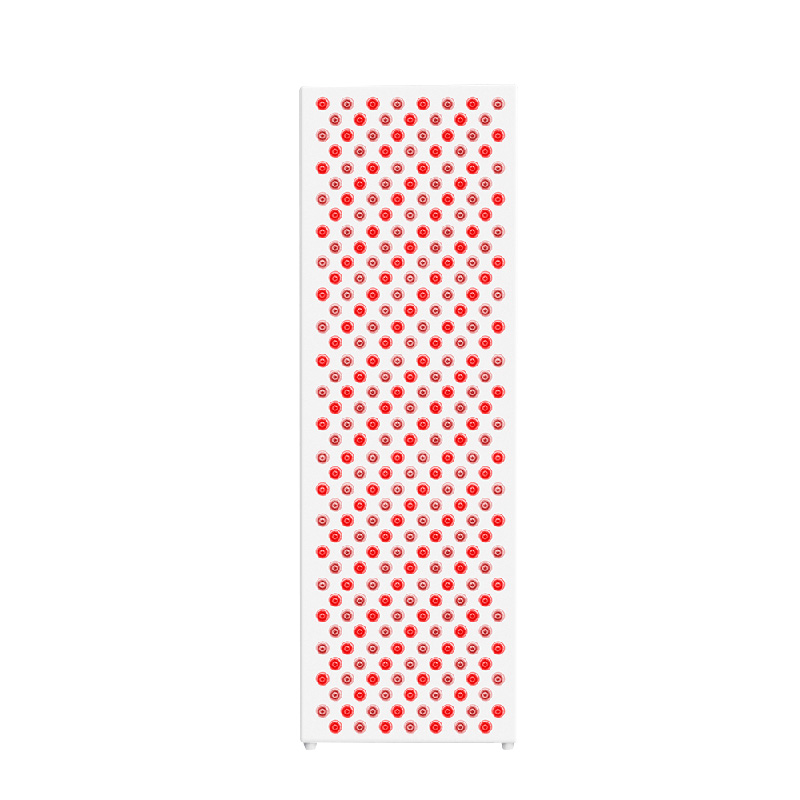
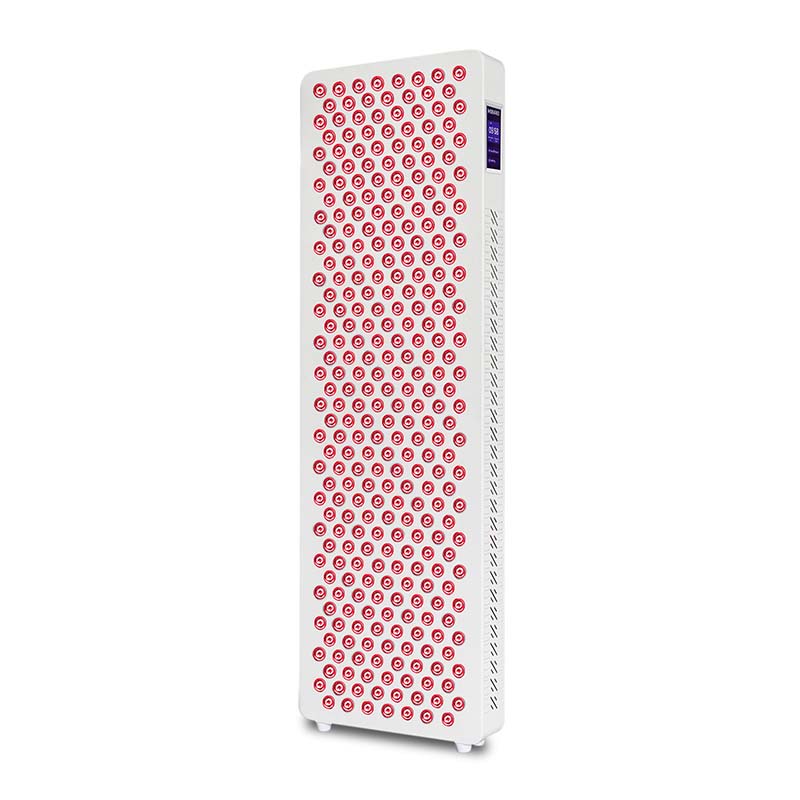
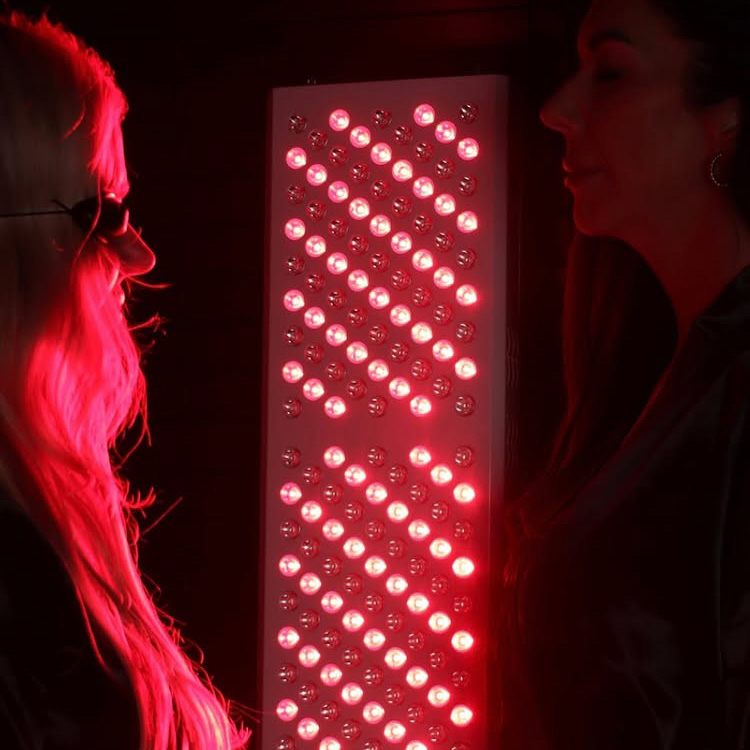
Red light panels designed specifically for total-body red light therapy solve this geometric problem by utilizing a large grid array format. By incorporating dozens, or even hundreds, of individual, high-powered medical-grade LEDs into a single large panel, the device can provide an even, uniform exposure of high-intensity red light over a massive surface area. Large, full-body modular panels can even allow therapeutic light to evenly cover the entire human body all at once. This ensures that every cell in the treatment area receives the exact same optimized dose of light energy, maximizing systemic benefits in a fraction of the time.
Feature Section 2: Safety, Heat, and the Biphasic Dose Response
While we have established that high intensity (irradiance) is necessary for red light to penetrate the body, it is equally important to understand why you cannot simply use a massive red “heat lamp” to achieve these results. This brings us to a fundamental biological principle in photobiomodulation known as the “Biphasic Dose Response,” historically referred to as the Arndt-Schulz curve.
This biological law states that weak stimuli slightly accelerate cellular activity, moderate stimuli strongly accelerate cellular activity, but incredibly strong stimuli will actually suppress, inhibit, or completely destroy cellular activity. In the context of red light therapy, this means there is a “sweet spot” for light dosage. If the light is too weak (like a red party bulb), nothing happens. If the light is optimized (like a clinical LED panel), the mitochondria produce massive amounts of ATP. However, if the light energy is overwhelmingly intense, or if it generates excessive thermal heat (like an agricultural red heat lamp used for keeping livestock warm), it can severely damage the tissue.
Excessive heat causes thermal stress to the cells. When a cell is under severe thermal stress, the delicate cytochrome c oxidase enzymes can denature and lose their function. The burst of Reactive Oxygen Species (ROS), which is beneficial in small amounts, can turn into a massive wave of toxic oxidative stress that overwhelms the cell’s antioxidant defenses, leading to cellular apoptosis (cell death).
Therefore, trying to use any random red heat lamp from a hardware store for red light therapy is not just ineffective—it is potentially dangerous. Clinical red light panels are meticulously engineered to deliver maximum photon density with minimal thermal output. They keep the tissue cool and comfortable, ensuring that the biological interaction remains strictly photochemical (light-driven) rather than photothermal (heat-driven). This delicate balance is what separates true wellness technology from dangerous DIY experiments.
Where to Get the Best Red Light Panels
With the explosive popularity of red light therapy, the internet has become saturated with thousands of types of red light panels offered for sale today. Some of these devices are engineered by highly reputable, well-established businesses that invest heavily in science and rigorous third-party testing. Unfortunately, a large segment of the market is flooded with opportunistic businesses that cut corners, use cheap components, and grossly misrepresent how their panels actually perform.
Because you cannot simply look at a red light panel and visually determine its wavelength accuracy or irradiance, consumers must act as diligent researchers. There are several vital ways to ensure that you are purchasing genuine, clinical-grade red light panels from reputable sources. These include:
- Verified Customer Reviews: The total number, depth, and quality of customer reviews can be a highly reliable indicator of the overall quality of the products that a business provides. Look for reviews that speak to specific health outcomes and the physical build quality of the device over time.
- Time in Business and Industry History: While red light therapy is technically a newer consumer technology, it requires a deep understanding of optical engineering. Any business that has existed for two years or less has simply not yet proven themselves in this complex field. Extra care and extreme skepticism should be applied when researching these newer, pop-up businesses that often import cheap, unverified products from overseas.
- Information Directly from the Business: Transparency is key. Some businesses providing red light therapy products utilize unethical marketing tactics and aggressively misrepresent the specifications of their competitors. It is always critically important to ensure that what one business says about another business’s products is actually true, and not to simply take their marketing copy as gospel.
- Compare Scientific Specifications: Once you have established that a business selling red light therapy panels is generally reputable, you will need to deeply understand the exact specifications of their different products. You must compare these specifications—specifically the exact wavelengths offered (e.g., 660nm and 850nm), the independently tested irradiance levels at specific distances, the flicker rate, and the electrical safety certifications—with the detailed specifications provided by other industry-leading businesses.
Exploring Mito Red Light
When evaluating the market for top-tier photobiomodulation devices, transparency, quality, and clinical efficacy are paramount. Many of our engineered products boast thousands of genuine five-star reviews provided by hundreds of highly satisfied customers who have experienced profound health transformations. We have been actively operating in this highly competitive business sector for several years, dedicating our resources to providing some of the absolute best, most technologically advanced red light therapy panels available anywhere in the world today.
We warmly welcome you to meticulously review our expansive selection of high-quality, scientifically engineered products on our website. Alternatively, we encourage you to contact one of our expert, highly trained customer service representatives directly at +1 866-861-6486 to learn more about the deep science behind photobiomodulation, the history of our company, and the exacting specifications of the premium products that we proudly provide.
Frequently Asked Questions (FAQ) About Red Light Sources
1. Can I use a regular incandescent light bulb painted red for red light therapy?
Absolutely not. A standard incandescent bulb painted red simply acts as a basic color filter. It blocks out the other colors of the visible spectrum, leaving behind a very weak, diluted fraction of red light. Standard bulbs emit a broad, chaotic spectrum of light and waste the vast majority of their electrical energy generating thermal heat rather than light photons. They completely lack the targeted wavelength precision (such as exactly 660 nm) and the high optical intensity (irradiance) required to penetrate the skin and effectively stimulate the cytochrome c oxidase enzyme within your mitochondria. Using one will provide ambient lighting, but zero clinical benefits.
2. Why do professional red light panels use LED technology instead of traditional bulbs?
Light Emitting Diodes (LEDs) are the absolute gold standard for photobiomodulation because they offer unparalleled control over the light spectrum. Unlike traditional bulbs, medical-grade LEDs can be engineered to emit light at one single, highly specific wavelength (for example, strictly 850 nm near-infrared light). This means that 100% of the device’s electrical power is utilized to generate the exact therapeutic light your body needs. Furthermore, LEDs are incredibly energy-efficient, meaning they can produce massive amounts of light intensity (photon density) without generating the dangerous thermal heat associated with older lighting technologies.
3. Does the “flicker” of a light source really matter for red light therapy?
Yes, flicker matters significantly for both the efficacy of the treatment and your neurological health. Most standard household lights run on alternating current (AC), causing them to rapidly turn on and off dozens of times a second. While you may not consciously see this flicker, your cells and nervous system register it, which can lead to eye strain, headaches, and general biological fatigue. Furthermore, a flickering light means you are fundamentally receiving less total light energy over the course of a session because the light is technically “off” for microscopic intervals. High-quality clinical panels use advanced internal drivers to convert AC power to smooth Direct Current (DC), eliminating flicker and ensuring a continuous, safe, and highly effective beam of therapeutic photons.
Conclusion: The Precision of Photobiomodulation
In the quest for optimized cellular health, longevity, and accelerated physiological recovery, red light therapy has proven itself to be one of the most powerful, non-invasive tools available to modern science. From its early origins in NASA space laboratories to its current status as a ubiquitous wellness modality, the mechanism of action remains rooted in the profound interaction between specific light photons and human cellular mitochondria.
However, as we have exhaustively detailed, the physical source of that light is the single most critical factor in determining success or failure. The human body requires exact, clinically proven wavelengths, delivered with robust optical intensity, evenly distributed across a large surface area, and free from the damaging effects of excessive thermal heat and neurological flicker.
You cannot trick your biology with a red party bulb, a colored plastic film, or a generic heat lamp. True photobiomodulation is a precise science of light delivery. If you are serious about harnessing the power of light to lower inflammation, enhance your skin’s collagen production, and drastically improve your body’s cellular energy output, investing in a meticulously engineered, professional-grade panneau de luminothérapie rouge is not just an option—it is an absolute biological necessity. Choose your light sources wisely, demand transparency and high-quality engineering, and empower your cells with the clinical-grade energy they require to thrive.

 English (United States)
  French (Canada)
  English (UK)
  English (Australia)
  English (Canada)
  English (New Zealand)
  English (South Africa)
  Bulgarian
  Croatian
  Arabic
  Czech
Czech  Danish
  Dutch
Dutch  Estonian
  Finnish
  French (France)
  Turkish
  Swedish
  Spanish
  Slovenian
  Georgian
  German
  Greek
Greek  Hebrew
  Hungarian
  Icelandic
  Indonesian
  Italian
  Japanese
  Korean
  Latvian
  Lithuanian
  Slovak
  Serbian
  Portuguese
  Luxembourgish
  Irish
Irish  Romanian
  Russian