Red light therapy generally needs to fall within the
600–900 nanometer (nm) range to be useful for skincare and wellness purposes. More specifically,
red light between 600–700 nm is usually best for surface-level skin concerns such as wrinkles, acne, redness, pigmentation, and collagen support, while
near-infrared light between 700–900 nm penetrates more deeply and is often used for muscles, joints, circulation, inflammation, and recovery. There is no single perfect wavelength for every person or every goal. The right wavelength depends on what you want the light to do, how deeply it needs to reach, and what kind of device you are using.
Red light therapy may look simple from the outside. A device glows red, you sit near it, and the treatment feels almost too easy to matter. But the science behind it is more specific than just “red light is good for you.” Different wavelengths interact with the body in different ways. A wavelength that is helpful for fine lines and uneven skin tone may not be strong enough to reach sore joints or deeper muscle tissue. In the same way, a deeper near-infrared wavelength may be excellent for recovery but less visible and less directly cosmetic than classic red light.
That is why wavelength matters. Light is not just brightness or color. It is energy moving in waves, and the length of those waves affects how far they travel into the body. The visible red part of the spectrum is useful for skin and surface tissue, while near-infrared light, which is mostly invisible to the human eye, can reach deeper layers. Choosing the right wavelength is less about chasing the most powerful number and more about matching the wavelength to your personal goal.
1. What Wavelength Is Best for Red Light Therapy?
The best wavelength for red light therapy depends on the treatment goal, but most effective devices use wavelengths between
600 nm and 900 nm. Within this range, the most commonly discussed therapeutic wavelengths include
630 nm, 660 nm, 810 nm, 830 nm, and 850 nm.
For skin-focused treatment, wavelengths around
630–670 nm are commonly used. These are visible red wavelengths. They are often chosen for concerns such as dullness, fine lines, wrinkles, acne, post-blemish marks, uneven tone, and general skin rejuvenation. They do not travel as deeply as near-infrared wavelengths, but that is exactly why they are useful for the skin. They concentrate more of their effect in the layers where many cosmetic concerns begin.
For deeper body support, wavelengths around
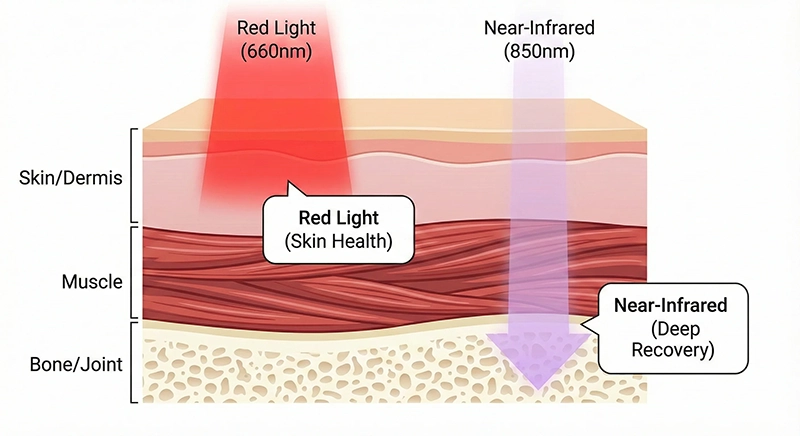
810–850 nm are often preferred. These belong to the near-infrared range. Near-infrared light can penetrate more deeply into soft tissue than visible red light, making it more relevant for muscles, tendons, joints, and recovery routines. This does not mean that near-infrared is automatically “better.” It simply means it is better suited for deeper targets.
A simple way to understand it is this:
red light is usually for skin; near-infrared light is usually for deeper tissue.
That said, many modern red light therapy devices combine both types. A panel might include 660 nm red light and 850 nm near-infrared light, giving users both surface-level and deeper benefits in one session. This combination is popular because most people do not have only one concern. Someone may want better skin tone, but also help with muscle soreness, stiffness, or post-workout recovery.
The key point is that the “best” wavelength is not one universal number. A person using red light therapy for facial rejuvenation may benefit most from 630–660 nm. A person using it for knee stiffness or muscle recovery may need 810–850 nm. A person wanting broad wellness support may prefer a device that combines red and near-infrared wavelengths.
2. Why Does Wavelength Matter in Red Light Therapy?
Wavelength matters because it determines how light behaves when it reaches the body. Different wavelengths penetrate to different depths, and those different depths influence what kind of effect the light may have.
Light sits on a broad electromagnetic spectrum. At one end are very short wavelengths, such as gamma rays and X-rays. At the other end are very long wavelengths, such as radio waves. Between these extremes is visible light, the part of the spectrum humans can see. Red light sits near the longer end of the visible spectrum, while near-infrared light sits just beyond visible red light.
The body does not respond to every wavelength in the same way. Some types of radiation can be harmful because they are ionizing, meaning they carry enough energy to damage DNA. Red light therapy is different. Red and near-infrared light are non-ionizing. They do not work like UV rays, X-rays, or radiation used in cancer treatment. They are generally used because they can interact with cells without damaging DNA in the way ionizing radiation can.
In red light therapy, the goal is not to burn, cut, or force the skin into trauma. Instead, the goal is to deliver a controlled amount of light energy that may support natural cellular processes. This is why the treatment is often referred to as photobiomodulation. The idea is that specific wavelengths of light may help cells function more efficiently, especially in processes related to energy production, repair, inflammation control, and circulation.
However, wavelength alone is not the only factor. A good treatment also depends on dose, power density, distance from the device, treatment time, and consistency. A correct wavelength used incorrectly may produce little benefit. A powerful device used for too long may create irritation or discomfort. As with many wellness tools, balance matters.
This is also why “more” is not always better. Longer sessions, stronger lights, or extremely frequent use do not necessarily mean faster results. Red light therapy usually works best when the wavelength, intensity, and timing are appropriate for the target area.
3. What Are the Main Red Light Therapy Wavelengths and Their Benefits?
The most useful red light therapy wavelengths can be grouped into visible red light and near-infrared light. Each wavelength range has a different role.
620–630 nm: surface-level red light
Wavelengths around
620–630 nm are visible red light and tend to work closer to the skin surface. They are often associated with skin comfort, circulation support, mild inflammation reduction, barrier support, and wound-healing routines. Because these wavelengths do not penetrate as deeply as near-infrared light, they are commonly used in beauty devices, facial devices, masks, and tools designed for visible skin improvement.
This range may be helpful for people whose main concerns are redness, dull skin, minor irritation, or early signs of aging. It can also be useful when the goal is to support the skin rather than treat deeper soreness.
660–670 nm: classic skin-focused red light
Wavelengths around
660–670 nm are among the most popular in red light therapy. This range is often used for collagen support, wrinkle reduction routines, acne-prone skin, scar appearance, uneven tone, and general skin rejuvenation. It penetrates somewhat more deeply than 630 nm while still remaining strongly relevant to the skin.
If someone asks what wavelength red light therapy should be for facial aging, 660 nm is one of the most common answers. It is frequently included in LED masks, panels, and handheld skincare devices because it offers a practical balance between skin penetration and visible red light activity.
810–830 nm: near-infrared light for deeper tissue
Wavelengths around
810–830 nm belong to the near-infrared range. They are not as visibly red as 630 or 660 nm, and some may be nearly invisible depending on the device. These wavelengths can travel deeper into the body, making them more relevant for muscles, joints, nerves, and recovery.
This range is often used in discussions about muscle recovery, soreness, joint support, circulation, and even brain-related photobiomodulation research. For someone focused on athletic recovery, stiffness, or deeper body support, near-infrared light around 810–830 nm may be more appropriate than visible red light alone.
850 nm and above: deeper near-infrared support
Wavelengths around
850 nm are also widely used in red light therapy devices, especially larger panels. This wavelength is popular because it can reach deeper tissues and is commonly paired with 660 nm red light. The combination of 660 nm and 850 nm is one of the most common in consumer red light therapy panels.
Near-infrared light around 850 nm is often chosen for muscle recovery, joint stiffness, endurance support, inflammation-related discomfort, and broader wellness routines. However, deeper does not always mean better. If your goal is surface-level skin improvement, a deeper wavelength may not replace the benefits of visible red light. The best choice depends on the target.
4. Where Does Red Light Therapy Work Best on the Body?
Red light therapy can be used on many areas of the body, but the best wavelength depends on where you plan to use it.
For the face, visible red light is usually the main choice. Wavelengths such as
630 nm and 660 nm are commonly used for facial masks, handheld wands, and small beauty devices. These devices are designed to sit close to the skin and target concerns such as wrinkles, acne, uneven tone, skin texture, and dullness.
For the neck and hands, red light may also be useful because these areas often show visible aging. Some devices are shaped specifically for these regions, such as LED neck pieces or glove-style devices for hands. Since the concern is usually skin quality, visible red wavelengths are often suitable.
For muscles, joints, and larger body areas, near-infrared light is usually more relevant. If the goal is to support sore shoulders, knees, hips, back muscles, or post-workout recovery, wavelengths such as
810 nm, 830 nm, or 850 nm may be more practical. These wavelengths can reach below the surface more effectively than visible red light.
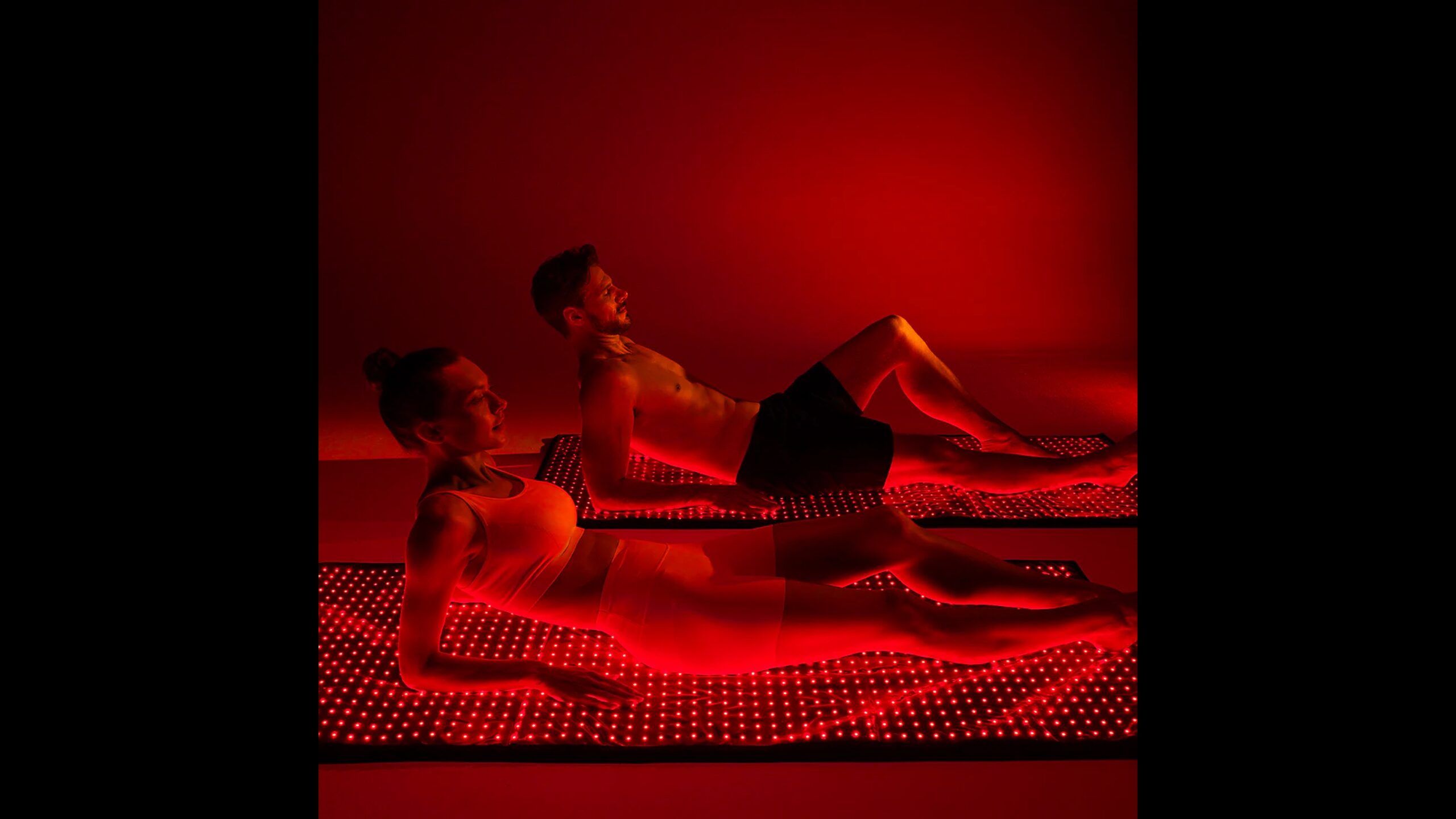
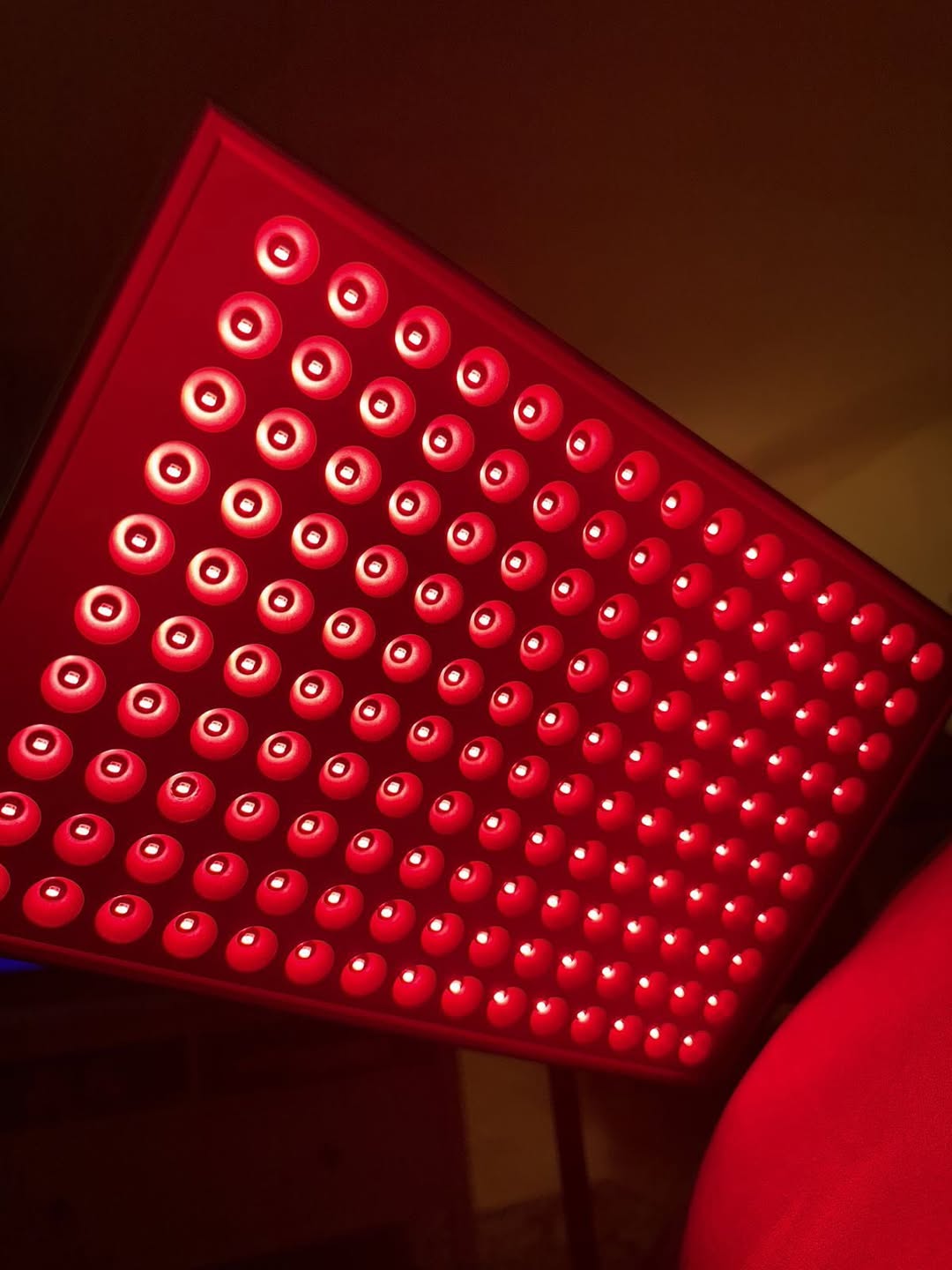
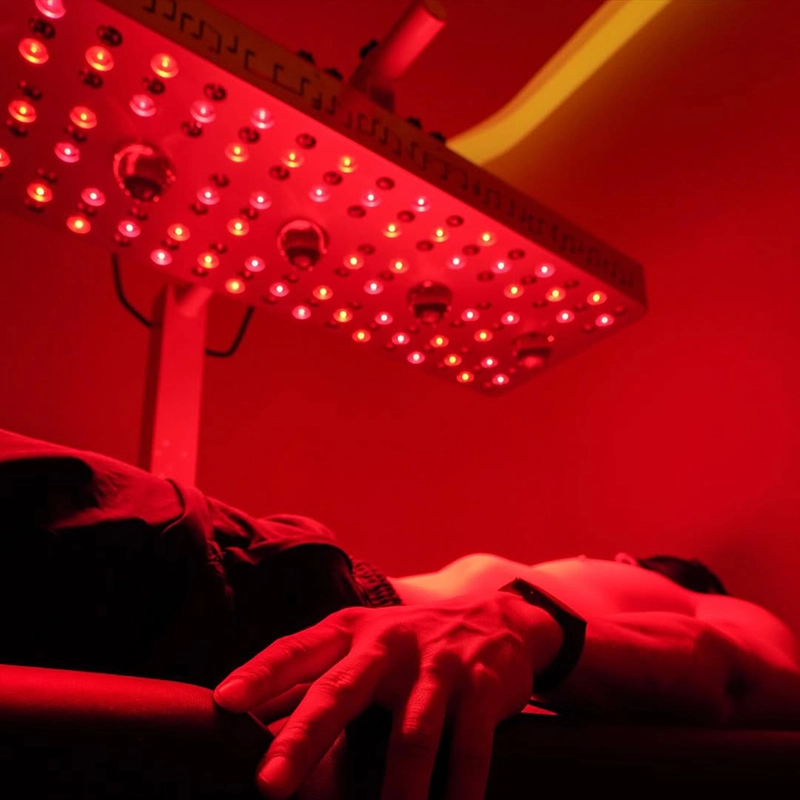
For full-body routines, panels are often preferred. A panel can cover a larger area at once and may include both red and near-infrared LEDs. This makes it useful for people who want a broader approach: skin support, recovery, energy, circulation, and general wellness.
Device size matters here. A small wand can be excellent for spot-treating a blemish mark or a wrinkle-prone area. But it is not efficient for treating the back, legs, or multiple joints. A mask is convenient for the face but not useful for the rest of the body. A large panel may be less portable, but it offers better coverage.
The treatment area should guide the wavelength and device style. Face-first users may prefer masks or small tools with 630–660 nm. Recovery-focused users may prefer panels with 660 nm plus 850 nm. People with mixed goals may benefit from a device that includes both red and near-infrared wavelengths.
5. When Should You Use Red Light Therapy for the Best Results?
Red light therapy is usually most effective when used consistently over time. It is not a one-time miracle treatment. Most users need repeated sessions before noticing meaningful changes, especially for skin texture, wrinkles, or recovery routines.
A common session length is around
10–20 minutes, depending on the device, distance, and power output. Some smaller devices are designed for shorter sessions, while larger panels may recommend a different treatment time. The manufacturer’s instructions matter because power density varies widely between devices.
Using red light therapy too long does not necessarily improve results. The body responds to dose, and more light is not always better. A moderate amount of exposure may be helpful, while excessive use may lead to diminishing returns or irritation. Think of it like exercise: the right amount can support progress, but overdoing it can create stress.
For skincare, people often use red light therapy several times per week. For muscle recovery or soreness, some users apply it after workouts or during recovery days. For joint stiffness, consistency may be more important than intensity. The goal is to make the routine sustainable rather than extreme.
Timing also depends on lifestyle. Some people like morning sessions because they feel it fits into their energy routine. Others prefer evening sessions because they can relax while using a mask or panel. The best time is usually the time you can repeat reliably.
The most important rule is to follow device-specific guidance. A high-powered panel used at close range for 20 minutes is not the same as a low-powered mask used for the same amount of time. Distance, strength, wavelength, and treatment area all affect the dose.
6. Who Should Consider Red Light Therapy?
Red light therapy may appeal to several types of users, but different people will need different wavelengths and devices.
People focused on skincare may consider red light therapy for fine lines, dullness, uneven tone, acne-prone skin, or overall skin quality. In this case, visible red wavelengths such as 630 nm and 660 nm are usually the most relevant. LED masks, facial panels, and handheld tools may be convenient for this group.
People who exercise regularly may be more interested in near-infrared wavelengths. If the goal is muscle recovery, soreness management, or performance support, wavelengths around 810–850 nm may be more useful. Larger panels are often better for athletes or active users because they cover more tissue at once.
People with joint stiffness or deeper discomfort may also look toward near-infrared light. Since joints sit below the skin surface, visible red light alone may not reach deeply enough. Near-infrared light is generally the better match for this purpose.
People who want general wellness support may prefer a combination device. A panel that offers both 660 nm and 850 nm can support surface-level and deeper goals. This kind of device is especially practical for users who do not want to buy separate tools for skin, muscles, and joints.
However, red light therapy is not a replacement for medical care. Anyone with a serious condition, active cancer concerns, photosensitivity, eye disease, pregnancy concerns, or medication that increases light sensitivity should speak with a qualified healthcare professional before beginning treatment. Red light therapy is generally considered low-risk when used correctly, but personal circumstances matter.
7. How Do You Choose the Right Red Light Therapy Device?
Choosing a red light therapy device should begin with one question:
What do you want it to do?
If your goal is facial skincare, look for clear wavelength information in the 630–670 nm range. A mask, wand, or small panel may be enough. If your goal is body recovery, look for near-infrared wavelengths such as 810 nm, 830 nm, or 850 nm. If your goals include both skin and deeper tissue, choose a device that combines red and near-infrared light.
A reliable device should clearly list its wavelengths. Be cautious of products that only say “red light” without telling you the actual nanometer range. A device that gives specific information, such as 660 nm red light and 850 nm near-infrared light, is easier to evaluate than one that relies on vague marketing language.
Power density, also called irradiance, is another important factor. This refers to how much light energy reaches the treatment area. Many effective devices fall somewhere around
30–100 mW/cm² at the recommended treatment distance, though this varies by device type. A very weak device may require impractically long sessions. A device that is too intense may feel uncomfortable or increase the risk of overheating the skin.
Treatment coverage is also important. A small handheld device is good for precise areas such as a scar, blemish mark, or wrinkle-prone zone. A face mask is convenient for beauty routines because it is hands-free and shaped for the face. A panel is better for larger areas such as the back, legs, shoulders, or full-body exposure.
Safety features should also influence your choice. Look for clear instructions, timer settings, automatic shut-off, eye protection recommendations, and trustworthy product information. Bright LEDs can cause eye strain, especially with prolonged exposure. Red and near-infrared light are not UV light, but you should still follow eye safety guidance.
Ease of use matters more than many people expect. A device that is annoying to hold, difficult to position, or complicated to clean may not become part of your routine. Hands-free devices such as masks and panels are often easier to use consistently. Timers are useful because they prevent guessing and help keep sessions controlled.
Brand credibility also matters. A company that specializes in light therapy, provides technical details, and explains how to use the product safely is generally more reassuring than a brand that sells unrelated items and adds a red light device as a trend product. Good design, clear wavelength data, practical instructions, and safety information are all signs of a more thoughtful device.
8. What Is the Difference Between Red Light and Near-Infrared Light?
Red light and near-infrared light are related, but they are not the same.
Red light is visible. It usually falls between
600 nm and 700 nm. When you turn on a red light therapy mask or panel, the glowing red color you see is visible red light. This type of light is most commonly used for skin-related goals because it works closer to the surface.
Near-infrared light begins beyond visible red light, usually around
700 nm and above. Humans cannot see most near-infrared light, even though the body can still receive it. Some devices may look dim or only partially red when near-infrared LEDs are active. This does not mean the device is weak. It may simply mean the light is outside the visible range.
The main difference is depth. Red light is more surface-focused. Near-infrared light penetrates deeper. That is why red light is usually linked with beauty and skin rejuvenation, while near-infrared light is often linked with muscles, joints, and recovery.
Both can be useful. One is not automatically superior to the other. They simply serve different purposes. In many cases, the strongest approach is to combine them. A device with both red and near-infrared wavelengths can address the skin and deeper tissue at
“`
the same time.
9. Why Is 660 nm So Popular in Red Light Therapy?
The 660 nm wavelength is popular because it sits in a useful zone for visible red light therapy. It penetrates more deeply than shorter red wavelengths while still being highly relevant to skin tissue. That makes it a common choice for facial rejuvenation, collagen-supporting routines, acne-prone skin, scars, and general skin tone improvement.
Many red light therapy masks, panels, and beauty devices include 660 nm because it offers a practical balance. It is not too shallow, but it is still clearly within the visible red range. For users who mainly want skin benefits, 660 nm is often one of the most useful wavelengths to look for.
However, 660 nm is not enough for every purpose. If you want support for deeper muscles, joints, or large body recovery, 660 nm alone may not be ideal. In that case, pairing it with a near-infrared wavelength such as 850 nm may be more effective.
So, is 660 nm good? Yes, especially for skin. Is it the only wavelength you need? That depends on your goal.
10. How Important Are Power, Distance, and Treatment Time?
Wavelength gets most of the attention, but it is only one part of the red light therapy equation. Power, distance, and treatment time are just as important.
A device can use the correct wavelength but still be ineffective if it does not deliver enough light energy to the skin. On the other hand, a very powerful device used too closely or too long may feel uncomfortable. This is why the recommended treatment distance matters.
Power density tells you how much light reaches a specific area. If the device is far away, less light reaches the body. If it is closer, more light reaches the body. However, closer is not always better. The manufacturer’s instructions are there to help users stay within a reasonable treatment range.
Treatment time also affects dose. A short session with a high-powered panel may deliver more light than a long session with a weak mask. This is why comparing devices only by session length can be misleading.
A practical target for many users is a session of about
10–20 minutes, depending on the device. Some small devices may be designed for shorter treatments. Some full-body panels may require specific distances and timing. The best routine is not the longest one. It is the one that delivers an appropriate dose consistently.
11. What Safety Features Should a Red Light Therapy Device Have?
A good red light therapy device should be safe, clear, and easy to use correctly.
First, it should clearly state the wavelengths. This helps you know whether the device is designed for skin, deeper tissue, or both. A product that does not disclose wavelength details may not be the best choice.
Second, it should provide usage instructions. These should include recommended session length, treatment distance, frequency, and eye safety guidance. Without these details, users may underuse or overuse the device.
Third, it should include practical safety features such as a timer, automatic shut-off, or a design that prevents unnecessary exposure. Eye protection may also be recommended, especially for bright panels. Red and near-infrared light are not UV light, but bright LEDs can still be uncomfortable to look at directly.
Fourth, it should be built well. Since red light therapy devices are often used repeatedly over months or years, durability matters. Cheap construction, unclear instructions, overheating, or inconsistent output can make a device less reliable.
Certifications or regulatory clearances may also help, depending on the market and product type. Not every good device will display the same certifications in every country, but reputable brands usually provide more transparent product information.
12. How Can You Tell If a Red Light Therapy Device Is Worth Buying?
A red light therapy device is more likely to be worth buying if it matches your goals, gives clear technical details, and fits easily into your routine.
Start with the wavelength. For skin, look for 630–670 nm. For muscles and joints, look for 810–850 nm. For broad use, consider a device that includes both visible red and near-infrared light.
Next, look at the treatment area. A small handheld tool may be affordable and precise, but it is not ideal for full-body treatment. A mask is convenient for the face but limited to beauty use. A large panel costs more but can treat larger areas more efficiently.
Then consider power and timing. If a device is too weak, you may need long sessions to get enough exposure. If it is too strong or lacks clear instructions, it may be difficult to use safely. A good device should make the routine simple.
Finally, think about whether you will actually use it. A device that looks impressive but is inconvenient may end up unused. Hands-free options, comfortable designs, timers, and easy storage can make a big difference.
Red light therapy is not only about buying the most advanced device. It is about buying the right device for your purpose.
Additional Feature 1: Red Light Therapy Wavelength Quick Chart
| Interval de lungimi de undă |
Type of Light |
Penetration Level |
Common Uses |
| 620–630 nm |
Visible red light |
Shallow |
Redness, skin barrier support, circulation, surface-level skin recovery |
| 660–670 nm |
Visible red light |
Medium skin depth |
Collagen support, wrinkles, acne-prone skin, scars, tone, texture |
| 810–830 nm |
Near-infrared light |
Adânc |
Muscle recovery, joint support, circulation, deeper tissue support |
| 850 nm+ |
Near-infrared/infrared light |
Deepest common range in home devices |
Larger muscles, endurance support, inflammation-related discomfort, deeper recovery |
Additional Feature 2: Simple Buying Checklist for Red Light Therapy Devices
- Does the device clearly list its wavelengths?
- Does it include 630–670 nm if your goal is skin improvement?
- Does it include 810–850 nm if your goal is muscle or joint support?
- Does it explain power density or treatment distance?
- Does it give clear instructions for session length and frequency?
- Does it include a timer or automatic shut-off?
- Does it recommend eye protection when needed?
- Is the treatment area large enough for your intended use?
- Is it comfortable and realistic to use regularly?
- Does the brand provide reliable product information?
Întrebări frecvente
1. What wavelength should red light therapy be for skin?
For skin, red light therapy is usually most useful between
630 nm and 670 nm. These wavelengths are commonly used for fine lines, wrinkles, acne-prone skin, uneven tone, dullness, and collagen-supporting routines. A device around 660 nm is especially common for facial skincare.
2. Is 630 nm enough for red light therapy?
Yes,
630 nm can be enough for surface-level skin benefits, especially if your goal is redness reduction, barrier support, or general skin rejuvenation. However, if you want deeper effects for muscles, joints, or recovery, 630 nm alone may not be enough. For deeper tissue, near-infrared wavelengths such as 810–850 nm are usually more suitable.
3. What is better, 660 nm or 850 nm?
Neither is universally better.
660 nm is better for skin-focused goals, including collagen support, wrinkles, acne-prone skin, and tone.
850 nm is better for deeper tissue goals, such as muscle recovery, joint stiffness, and body-wide wellness routines. Many people prefer devices that include both because they support different layers of the body.
Concluzie
Red light therapy does not rely on one magical wavelength. The useful range is generally
600–900 nm, with visible red light from
600–700 nm serving skin-focused goals and near-infrared light from
700–900 nm reaching deeper tissues such as muscles and joints. The right wavelength depends on what you want to improve.
For facial rejuvenation, acne-prone skin, uneven tone, fine lines, and collagen support, wavelengths such as
630 nm and 660 nm are often the most relevant. For muscle soreness, joint stiffness, recovery, and deeper tissue support, wavelengths such as
810 nm, 830 nm, and 850 nm are usually more appropriate. For people who want both beauty and body benefits, a combined red and near-infrared device may be the most practical choice.
The smartest approach is not to ask only, “What is the best wavelength?” A better question is, “What wavelength matches my goal?” Once you know that, choosing a device becomes much easier. Look for transparent wavelength information, reasonable power, clear instructions, safe design, and a format you will actually use.
In red light therapy, wavelength matters because depth matters. Skin, muscles, joints, and deeper tissues do not all need the same kind of light. When you match the wavelength to the purpose, red light therapy becomes less mysterious and much more useful.

 English (United States)
  French (Canada)
  English (UK)
  English (Australia)
  English (Canada)
  English (New Zealand)
  English (South Africa)
  Bulgarian
  Croatian
  Arabic
  Czech
Czech  Danish
  Dutch
Dutch  Estonian
  Finnish
  French (France)
  Turkish
  Swedish
  Spanish
  Slovenian
  Georgian
  German
  Greek
Greek  Hebrew
  Hungarian
  Icelandic
  Indonesian
  Italian
  Japanese
  Korean
  Latvian
  Lithuanian
  Slovak
  Serbian
  Portuguese
  Luxembourgish
  Irish
Irish  Romanian
  Russian